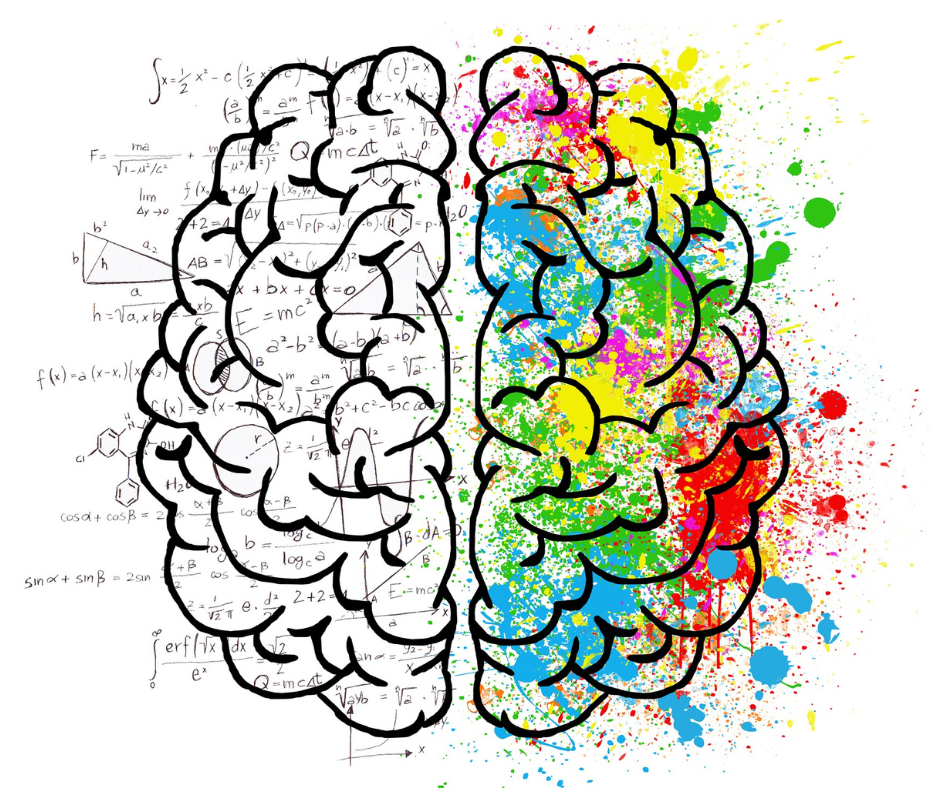
Welcome back to the Smarter Accountant podcast. So what does brain science have to do with accounting and why is it so important for accountants to understand?
As I shared in episode #1, what I have learned in my personal growth studies and my Professional Certified Coach certification has helped me immeasurably in my accounting career. Understanding how my brain works and how to manage it has made the biggest impact, both professionally and personally.
The funny thing is that I’ve been studying this for over 10 years and only recently heard about a term called “neuro accounting.” Neuro accounting, also known as neuroscience in accounting, is an emerging field that combines principles of neuroscience with accounting practices to better understand and explain financial decision-making processes.
I’ll be doing a podcast on neuro accounting at some later date but here’s what’s really great about this podcast – I can explain complicated topics in a simple way. All you need to know right now is that every week I will be showing you how important it is to understand your brain as an accountant.
In episode #1 I explained that the simplest way to look at our brains is dividing it into two parts – the lower, primitive brain that I refer to as the Toddler, and the higher, executive functioning brain that I refer to as the Supervising parent. Every accountant, who hasn’t been coached by me, is allowing the lower, primitive brain to run their careers and their lives.
Honestly, it’s not our fault because no one is teaching us this important information. We’re learning the latest accounting technology, but not what makes it possible for us to use that technology.
In episode #1 I also talked about how the primitive brain has been with us since humans lived in caves and is the part of our brain that runs our lives 80 -90% of the time. It is also motivated by three things – to seek pleasure, to avoid pain, and to conserve energy.
As you listen to each week’s episode, I will keep referring back to all this because it is the foundation of understanding, in the simplest way possible, how your brain works. When you understand how the lower, primitive brain works, you can also create awareness of the problems it creates.
You’re also going to want to remember that your higher brain, the prefrontal cortex, is only present in humans and it’s super power is to think about what we think about. It’s the part of the brain that helps you make decisions, helps you plan, and can delay gratification; it’s the part that can make you a Smarter Accountant.
Learning how to intentionally use this part of your accountant brain is the secret to overcoming all the issues that typically plague accountants. Honestly, my coaching clients tell me all the time that they wish they had learned this earlier and don’t understand why we’re not taught this early on in school.
As I like to tell my coaching clients, we have the best piece of machinery on the planet, bar none, and no one has ever given us the instruction manual. We have no idea how our brain works, all the amazing features available, and how we can manage our brains.
This podcast will be the place where brain science meets accounting, helping to simplify and improve your awareness of the importance of mind management. I believe it’s essential for accountants to understand the cause of problems so that we can change the effect.
That’s what my book, “The Smarter Accountant” is all about and why I wanted to do this podcast in the first place. The world needs Smarter Accountants; not burned out, stressed out, frustrated accountants that dread going to work, who are overwhelmed by everything happening both professionally and personally, and who are considering walking away from the profession.
Accountants need support, and I know what will make all the difference – learning how to be a Smarter Accountant. As I said before, every client I’ve ever worked with and coached has said to me, “Why are we never taught this in school? We need to learn this sooner rather than later!”
I couldn’t agree more, and that’s why I believe this podcast will be a game-changer for the accounting industry. We need to learn how to manage our brains so that we can manage everything else.
Applying Brain Science in Accounting: Examples and Case Studies for Success
As my coaching clients can attest, applying brain science in accounting is a game-changer. Here are some examples and case studies to illustrate the importance of brain science for accountants:
Emotional regulation and decision-making: Research in neuroscience has shown that emotions play a significant role in decision-making. When we understand the impact of emotions on our decision-making processes, we can better regulate our emotions to make more rational and informed financial decisions.
For example, a study published in the Journal of Neuroscience found that individuals with better emotional regulation skills were more likely to make advantageous decisions in a financial context. Accountants who develop emotional intelligence and regulate their emotions effectively can make sound judgments and provide valuable financial advice to clients.
Attention and multitasking: As accountants, we often face a multitude of tasks and responsibilities simultaneously. Understanding the limitations of the brain’s capacity to multitask can help us prioritize our work and avoid cognitive overload. Research has consistently shown that multitasking decreases productivity and increases errors.
For instance, a study conducted at Stanford University revealed that heavy multitaskers perform more poorly on cognitive tasks compared to individuals who focus on one task at a time. By learning how to manage our brains, we can improve our efficiency and accuracy.
Neuroplasticity and skill development: Neuroplasticity refers to the brain’s ability to adapt and reorganize itself based on experience and learning. By embracing the concept of neuroplasticity, you can actively seek continuous learning opportunities to develop new skills and improve your performance.
For example, studies have demonstrated that practicing new skills and engaging in deliberate practice can lead to structural changes in the brain, resulting in enhanced proficiency. While we have plenty of continuing education courses to choose from, the most important skill you can learn as an accountant is how to manage your mind.
Stress management and resilience: As accountants, we often work in high-pressure environments, and chronic stress can significantly impact our well-being and job performance. Understanding the brain’s role in the feeling of stress can help us implement effective stress management strategies and build resilience.
Research has shown that chronic stress can impair cognitive functions, such as memory and decision-making. By learning how to significantly reduce or eliminate stress and overwhelm, a subject I’ll be covering in next week’s episode, you’ll be able to mitigate the negative impact of stress and maintain optimal brain function.
The Power of Mind Management: Harnessing the Potential of Your Accountant Brain
While it may not seem immediately obvious, as accountants, we can truly benefit from understanding brain science. Here are some key areas where brain science can significantly impact our work:
Making better decisions: As an accountant, we help people make decisions about their money, but by understanding how the brain makes decisions, you can not only make better decisions for yourself, but also help your clients make better choices as well. If you do not know how to manage your brain, you are letting the lower, more reactionary part of your brain make decisions for you.
It’s like letting a toddler run your professional and personal life. And let’s be honest – I don’t know any accountant that wants a toddler running their career or their life.
Improving emotional intelligence: Since the introduction of the concept of emotional intelligence, numerous studies have been done, pointing to the fact that emotional intelligence (or EQ) is becoming a better predictor of professional success than someone’s IQ. Some of the results of those studies show that Emotional intelligence is responsible for 58% of your job performance and that 90% of all top performers have a very high emotional intelligence.
In addition, in 2015, Grant Thornton UK presented the results of a five-year organizational transformation in which emotional intelligence was built into its leadership training, resulting in a 35% revenue increase and a 16% uplift in client satisfaction, and partners at another large US public accounting firm found that those with significant strengths in self-management contributed 78% more incremental profit than partners without them. So much for emotional intelligence being a “soft skill”!
Recognizing cognitive biases: Everyone has cognitive biases, which are mental shortcuts or patterns of thinking that can lead to errors in judgment. By understanding these biases, we can be more aware of them in our own thinking and help clients recognize and address biases in their decision-making. Awareness is the key when it comes to your brain’s role in cognitive biases.
Awareness of cognitive biases allows accountants to foster a more rigorous and unbiased approach to our work, enhancing the accuracy and reliability of financial information.
Improving communication: As accountants, we not only need to communicate complex financial information to non-experts, but we also need communication skills to function in all areas of our lives. Whether it’s dealing with a difficult client or a challenging mother-in-law, brain science can help us not only improve our communication skills, but begin to understand others better.
By learning how the brain processes and retains information, it can help us improve our communication style to be more effective and engaging professionally, as well as learning our brain’s role in communicating with anyone, professionally or personally. Improved communication can make our professional and personal life easier.
Managing stress and workload: There’s no denying that as accountants, we often work in high-pressure environments with tight deadlines. Understanding the effects of stress on the brain can help us manage our workload and prioritize tasks more effectively.
In next week’s episode I’ll be talking more about stress, but for now, just know that when you learn your brain’s role in your feeling of stress, you’ll be amazed at how much easier it is to have the career and the life you want. You’ll be able to maintain mental clarity and make sound judgments, even in demanding situations. Understanding the brain’s role regarding stress can lead to a better work-life balance and a more fulfilling career.
Managing our time: As accountants, time is incredibly valuable but it seems like there is never enough time to get everything done. Better time management for accountants is a topic I’ll be discussing a lot on this podcast because understanding your brain’s role in managing your time and how you can get more done in less time will be a game changer for you both professionally and personally.
I am passionate about teaching accountants how to be more productive without burning out in the process which is why I created a process that blends brain science with time management. I’ll be talking more about that in upcoming episodes, but for now just know that until you learn how to manage your mind, you will not be able to effectively manage your time..
So, while you might not see the connection between brain science and accounting right now, I promise you that as you continue to listen each week you’ll begin to see the light. Understanding how the brain works can help you be more effective in your work and better serve your companies and your clients.
Applying Brain Science in Accounting: Testimonials and Examples
Here are just a few of the things my accountant coaching clients have said about learning how to manage their brains in my 6-week coaching program, The Smarter Accountant Program:
One client shared, “I was skeptical at first, however, I can say this was one of the BEST investments I made! Learning how to manage my brain was pivotal to completing more tasks and honoring my commitments that I made to myself via my calendar. I truly believe this program has reduced my stress and has equipped me with the tools to manage my time better.”
Another client explained, “After learning the process for managing my brain, I am aware of my thoughts and the feelings they provoke. The power they have over every action I do or do not take, is amazing. I am looking forward to tax season for the first time in years and actually feel I have control over my day. I recommend this program for any one that feels overwhelmed on a daily basis by the tasks they face and is struggling to find peace.”
A recent client just shared, “The Smarter Accountant program has been a game changer for me, both professionally and personally. Although I am still in the early days of applying these principles, I can already see the impact in my more intentional thoughts and lowered stress level. I can’t wait to see where my work together with Dawn takes me next!”
Those are just a few of the testimonials of accountants just like you who have struggled with various things in the accounting career and their lives. Learning how to manage their brains changed all that.
So what does brain science have to do with accounting? Everything!
You’ll hear me repeat this a lot, but when you learn how to manage your brain, you can manage everything else. And thankfully, it takes a small investment of your time to learn the invaluable skill of managing your brain.
By applying brain science to accounting, clients have been able to:
- Significantly reduce stress and overwhelm
- Gain a competitive advantage
- Create more time
- Achieve any goal they set, whether it’s personally or professionally
- Have a sustainable career and a balanced life
- Ward off burnout
- Create a legacy they can be proud of
- Become a better leader
- Become a Smarter Accountant
Thankfully, brain management makes that, and more, possible.
As accountants, we need a simple way to manage our accountant brains and I can show you how. Let’s face it, as accountants we’re already smart, but we can be so much smarter when we stop underutilizing our brains.
Okay, that’s what I have for you today. Make sure you tune in next week when I discuss the accountant’s guide to stress reduction.
If you want to see how your accountant brain currently measures up, I suggest you take The Smarter Accountant Quiz. It’s the starting point to see if and how you are underutilizing your accountant brain.
It only takes 5 minutes and you can check it out at www.thesmarteraccountant.com
Also, I would appreciate it if you could get the word out to other accountants about this podcast. The more accountants find out about it, the more we can begin to change the narrative in the accounting profession.
Don’t forget – the truth is that you’re already smart, but this podcast will show you how to be smarter.