
The Accountant’s Guide To Stress Reduction

Welcome back to the Smarter Accountant Podcast. So, what’s the deal with accountants and stress?  Why are we so stressed and on the brink of burnout so often?

Well thankfully, stress and overwhelm are some of my favorite topics to discuss.  When I’m doing a presentation or talking one on one with accountants and I ask them to tell me the last time they felt stressed, it’s typically within the past 24 hours (if not 15 minutes ago!).

We all know that accounting is a demanding and complicated profession that often comes with high levels of stress and overwhelm. Whether you’re in public or private accounting, we frequently find ourselves working long hours, particularly during tax seasons and various year-round closing periods.

But in recent times, it seems like we’re experiencing more stress than ever with the pandemic creating unprecedented challenges and uncertainties for accountants. The sudden shift to remote work, the economic impact on businesses and individuals, and the ever-changing government support programs have added additional layers of complexity to our already demanding roles. 

The problem is that, if we’re not careful, prolonged exposure to stress can lead to burnout, decreased job satisfaction, impaired decision-making, and increased susceptibility to mental health issues such as anxiety and depression. Recognizing the significance of addressing stress in the accounting profession is essential not only for the well-being of individual accountants but also for the overall productivity and success of our industry.

That’s why in this episode, I want to teach you about the brain and its role in how and why we feel stress. I’ll also share some tips on how to manage stress and make it easier for you to handle all the challenges you face.

Once I learned what I’m going to share with you, I not only began to decrease my stress, but I was able to eliminate stress during tax season.  Yes, you heard me correctly – I am a CPA in public accounting, I have some of the biggest and complicated tax returns in the office, and I do not experience stress during tax season. 

How is that possible?  Let me explain what every accountant needs to know but no one is teaching you.

Where stress comes from

I asked the Smarter Accountant community what they wanted me to talk about on this podcast, and stress was the most popular topic. Many accountants are feeling stressed and overwhelmed on a daily basis.

Just like you, I used to think that things like the job itself, the IRS, clients, the pandemic, and deadlines were causing my stress. I’ve been through decades of tax seasons, so it felt like the stress would never end.

But I’ve since learned that those things are not the real causes of stress. The true cause of stress is our lower, primitive brain. 

This part of our brain has been with us since humans lived in caves, and it’s responsible for keeping us safe from danger. It makes us alert and tells us when to run or stay still.

For example, it’s the part of our brain that makes us feel urgent and check emails even when we’re not supposed to or makes us feel overwhelmed when we have a long to-do list. Our primitive brain is always on high alert, looking for threats.

The problem is that our primitive brain sees many things as threats now, even though they’re not life-threatening. It gets triggered by things like work emails, notifications, and deadlines. 

This triggers a stress response in our body, preparing us to fight or run away. Our heart beats faster, and our body gets ready for action.

But it’s important to understand that it’s not the actual work or deadlines causing the stress. It’s our primitive brain perceiving them as threats and setting off our body’s stress response. Our brain reacts as if we’re being chased by a lion.

Unfortunately, as accountants, we’re often told that stress is normal because of our work and deadlines, but that’s not true. We need to learn how to use our higher brain, the executive functioning part, to communicate with and manage our primitive brain. We need to find a way to turn off the stress response.

Changing jobs or circumstances won’t solve the problem because wherever we go, our brain goes with us. The key is to understand that more work doesn’t mean more stress. The only thing causing stress is our lower, primitive brain thinking there’s danger everywhere.

If you want to reduce stress and be more productive, you need to learn how to be aware of and manage your lower brain.

The importance of brain management

Managing your brain is super important, especially for accountants dealing with stress and overwhelm.

Brain management means figuring out how to stop your brain from creating the feeling of stress and overwhelm. In my coaching program, I teach my clients a simple but powerful formula called The Model. 

It helps them understand what their lower, primitive brain is doing and how their higher, executive functioning brain can take charge.  The great thing about learning this formula is that once you know how your brain works and how to manage it, you can significantly reduce your stress and overwhelm.

When you’re able to control your brain better, you become a much Smarter Accountant. Stay tuned for future episodes where I’ll share more about The Model and how it can help you, but for now, just know that there is a simple but powerful formula that will help..

The truth is that when you can take charge of your brain more often, that’s when you can become a much Smarter Accountant.

Becoming a Smarter Accountant

While it’s normal for accountants to feel stressed and overwhelmed, it’s not because of things like deadlines or a long to-do list. The feelings of stress and overwhelm are actually caused by our brain’s interpretation of those circumstances.

We have a lower part of our brain that I call “The Toddler,” and it’s in control of our lives 80 – 90% of the time without us even realizing it. Because of this lower, Toddler part of our brain being in charge most of the time, it can make our lives feel out of control.

But here’s the good news: you don’t have to let the Toddler run your life. You have a higher, executive functioning part of your brain I call the “Supervising Parent,” and you can learn to use it more often and intentionally.

The most important thing to understand from this episode is that stress and overwhelm are actually optional. How?  Because they are feelings, and feelings are only ever caused by our thoughts, not the circumstances around us.

Many of us believe that our circumstances, like tax season or a busy schedule, are what makes us feel stressed. But that’s not true. It’s actually our thoughts about those circumstances that create the feelings of stress and overwhelm.

For example, let’s say it’s April 1st and the tax deadline is approaching. A typical accountant might think, “There’s too much to do,” and automatically feel stressed. This leads to unproductive actions like spinning in confusion about what to do next, procrastination, and snapping at people.

But a Smarter Accountant can choose to think a different thought, like “Just one thing at a time,” which creates a feeling of focus. With this feeling, they can make a plan, use their time wisely, and take productive actions to make tax season easier.

The key is to be aware of the thoughts creating the feeling of stress and intentionally choose ones that create better feelings and results. Stress is not caused by the circumstances themselves, but by our thoughts about the circumstances

Becoming a Smarter Accountant means understanding that your feelings are optional.  You don’t need anything to change in your circumstances to feel better and get better results. You can choose how you want to feel, even during deadlines.

It’s important to understand that we have over 60,000 thoughts a day creating a lot of feelings like stress and overwhelm.  You need to become more aware of some of those thoughts so that you can use your higher brain to reduce stress and overwhelm.

Remember, stress is always caused by a thought from our primitive brain. And you have the power to choose better thoughts and feelings. Every single time.

My 3 secrets for having a stress-free day or a stress-free tax season   

If it seems impossible to have a stress-free day or a stress-free busy season, I’m here to honestly tell you it’s not.  Your resistance to the idea and your doubt is perfectly normal because you’ve probably never allowed yourself to believe that it was possible.

But that’s the first secret I want to share with you – you have to be open to the idea that it’s possible.  That wonderful, smart accountant brain of yours will always show you proof of what you believe to be true, so if you believe it’s not possible, that’s all your brain will look to prove true.

It will offer you thoughts like “It’s a nice idea, but it’s not possible for me” or “It sounds interesting but it’s probably too complicated”.  I completely get it because that’s what I thought at first as well.

Stress was such a familiar feeling, that being open to the idea that I could be stress-free and get more work done, be more efficient, and be happier, seemed like crazy talk.  Since I wasn’t surrounded by examples of stress-free accountants, I had to show my brain it was possible by looking at other areas of my life where I had used the tool I learned, and had dramatically reduced my stress.

The second secret for having a stress-free busy season is that it’s easier than you think.  Once I learned how to manage my brain, I felt better in many different areas of my life, but I never considered applying what I learned to something like my stress at work because I believed that stress was just part of the job of being an accountant; as if it was just an irrefutable fact.

Like many accountants, I made the connection between the feeling of stress and being able to get through deadlines, as if stress was the necessary fuel in order to make it possible to get all my work done.  Thankfully, I learned that that’s completely false and that the truth is that stress actually wastes time and decreases productivity, making it a horrible fuel to use if you want to be productive and efficient.

It’s important to know that the lower, primitive part of your brain does not want to change anything that’s familiar because something like learning to think differently expends energy.  Remember, that the lower brain is motivated to seek pleasure, avoid pain and be efficient, so it will offer you thoughts that will resist the idea of changing a strongly held belief, like the belief that stress is just part of busy season.

The key with this, is having a compelling reason to want to override the toddler part of the brain when it doesn’t want to believe something different, and throws a tantrum.  The most important thing is that you have a compelling reason, and that it needs to be more powerful than your resistance to the idea of a stress-free busy season.

If you are feeling resistance right now to this idea that you can have a stress-free busy season, that’s totally normal, but you should still come up with a strong, compelling  reason why you want to feel less stress anyway.  My compelling reason for wanting to reduce my stress during tax season was my family; I wanted to be there for my husband and my children in ways that stress had made impossible.

My suggestion is to start to think about all the ways that stress has affected you mentally, physically, emotionally and relationally, and open up to the idea that not only is it possible, but it might not be as difficult as you might have been led to believe.

The third secret for having a stress-free busy season is the tool I learned to use for managing my brain which is called The Model.  I’ll be explaining it in more detail in an upcoming episode, but I can tell you it was a total game changer for me professionally and personally.

Like I said before, I was applying this tool to other areas of my life and had never thought to apply it to my level of stress during busy season because I initially didn’t believe it was possible, especially since I had 30+ years of proof at the time that busy season equals stress.

But once I started to apply the tool, The Model, I started to see small changes happening.  I started to have more energy at the end of the day, not be so annoyed at my boss when he put more work on my plate, and I was able to manage my time so much better, getting much more done in less time.

By spending only 10 minutes in the morning using the tool I had learned, I was able to set the tone for the rest of the day.  Working those extra hours that are required during busy season was no longer such a struggle and I was able to be much more focused and productive than I had ever been, plus have more time with my family.

I began sleeping better, my headaches went away, and even my chiropractor noticed a difference in how my body was reacting as I continued managing my brain.  With each day, I was getting better and better at managing the lower, Toddler brain.  

So just know that not only is it possible to have a stress-free busy season, but it’s actually easier than you think.  You absolutely can have the stress-free life that I’ve been able to achieve, without things like meditation or medication, by just unlearning some things and then learning and applying the 3 secrets I’ve shared.

If you’re feeling stressed and overwhelmed, thinking you’ve tried everything, don’t worry. There is a solution, but you need to let go of some limiting beliefs about what’s considered normal for accountants.

Stay tuned as I help you challenge those limiting beliefs. Also, if you’re curious about how your accountant brain measures up, I recommend taking The Smarter Accountant Quiz at www.thesmarteraccountant.com

It only takes 5 minutes and can give you valuable insights.

Lastly, please help spread the word about this podcast among other accountants. The more accountants who learn about it, the more we can change the narrative in the accounting profession.

Remember, you’re already smart, but this podcast will show you how to be even smarter.
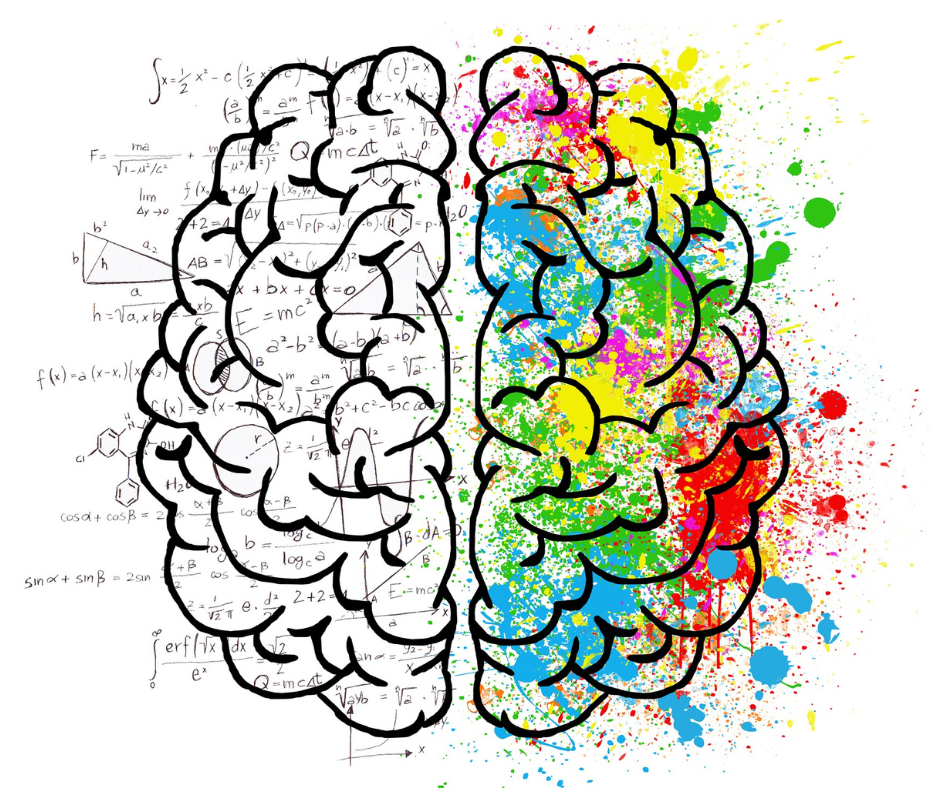
The Place Where Brain Science Meets Accounting

Welcome back to the Smarter Accountant podcast.  So what does brain science have to do with accounting and why is it so important for accountants to understand?

As I shared in episode #1, what I have learned in my personal growth studies and my Professional Certified Coach certification has helped me immeasurably in my accounting career.  Understanding how my brain works and how to manage it has made the biggest impact, both professionally and personally.

The funny thing is that I’ve been studying this for over 10 years and only recently heard about a term called “neuro accounting.” Neuro accounting, also known as neuroscience in accounting, is an emerging field that combines principles of neuroscience with accounting practices to better understand and explain financial decision-making processes. 

I’ll be doing a podcast on neuro accounting at some later date but here’s what’s really great about this podcast – I can explain complicated topics in a simple way. All you need to know right now is that every week I will be showing you how important it is to understand your brain as an accountant. 

In episode #1 I explained that the simplest way to look at our brains is dividing it into two parts – the lower, primitive brain that I refer to as the Toddler, and the higher, executive functioning brain that I refer to as the Supervising parent.  Every accountant, who hasn’t been coached by me, is allowing the lower, primitive brain to run their careers and their lives.

Honestly, it’s not our fault because no one is teaching us this important information.  We’re learning the latest accounting technology, but not what makes it possible for us to use that technology.

In episode #1 I also talked about how the primitive brain has been with us since humans lived in caves and is the part of our brain that runs our lives 80 -90% of the time.  It is also motivated by three things – to seek pleasure, to avoid pain, and to conserve energy.

As you listen to each week’s episode, I will keep referring back to all this because it is the foundation of understanding, in the simplest way possible, how your brain works.  When you understand how the lower, primitive brain works, you can also create awareness of the problems it creates. 

You’re also going to want to remember that your higher brain, the prefrontal cortex, is only present in humans and it’s super power is to think about what we think about.  It’s the part of the brain that helps you make decisions, helps you plan, and can delay gratification; it’s the part that can make you a Smarter Accountant.

Learning how to intentionally use this part of your accountant brain is the secret to overcoming all the issues that typically plague accountants.  Honestly, my coaching clients tell me all the time that they wish they had learned this earlier and don’t understand why we’re not taught this early on in school.

As I like to tell my coaching clients, we have the best piece of machinery on the planet, bar none, and no one has ever given us the instruction manual.  We have no idea how our brain works, all the amazing features available, and how we can manage our brains.

This podcast will be the place where brain science meets accounting, helping to simplify and improve your awareness of the importance of mind management.  I believe it’s essential for accountants to understand the cause of problems so that we can change the effect.

That’s what my book, “The Smarter Accountant” is all about and why I wanted to do this podcast in the first place.  The world needs Smarter Accountants; not burned out, stressed out, frustrated accountants that dread going to work, who are overwhelmed by everything happening both professionally and personally, and who are considering walking away from the profession.  

Accountants need support, and I know what will make all the difference – learning how to be a Smarter Accountant.  As I said before, every client I’ve ever worked with and coached has said to me, “Why are we never taught this in school?  We need to learn this sooner rather than later!”

I couldn’t agree more, and that’s why I believe this podcast will be a game-changer for the accounting industry.  We need to learn how to manage our brains so that we can manage everything else.

Applying Brain Science in Accounting: Examples and Case Studies for Success

As my coaching clients can attest, applying brain science in accounting is a game-changer.  Here are some examples and case studies to illustrate the importance of brain science for accountants:

Emotional regulation and decision-making: Research in neuroscience has shown that emotions play a significant role in decision-making. When we understand the impact of emotions on our decision-making processes, we can better regulate our emotions to make more rational and informed financial decisions. 

For example, a study published in the Journal of Neuroscience found that individuals with better emotional regulation skills were more likely to make advantageous decisions in a financial context. Accountants who develop emotional intelligence and regulate their emotions effectively can make sound judgments and provide valuable financial advice to clients.

Attention and multitasking: As accountants, we often face a multitude of tasks and responsibilities simultaneously. Understanding the limitations of the brain’s capacity to multitask can help us prioritize our work and avoid cognitive overload. Research has consistently shown that multitasking decreases productivity and increases errors. 

For instance, a study conducted at Stanford University revealed that heavy multitaskers perform more poorly on cognitive tasks compared to individuals who focus on one task at a time. By learning how to manage our brains, we can improve our efficiency and accuracy.

Neuroplasticity and skill development: Neuroplasticity refers to the brain’s ability to adapt and reorganize itself based on experience and learning. By embracing the concept of neuroplasticity, you can actively seek continuous learning opportunities to develop new skills and improve your performance. 

For example, studies have demonstrated that practicing new skills and engaging in deliberate practice can lead to structural changes in the brain, resulting in enhanced proficiency. While we have plenty of continuing education courses to choose from, the most important skill you can learn as an accountant is how to manage your mind.  

Stress management and resilience: As accountants, we often work in high-pressure environments, and chronic stress can significantly impact our well-being and job performance. Understanding the brain’s role in the feeling of stress can help us implement effective stress management strategies and build resilience. 

Research has shown that chronic stress can impair cognitive functions, such as memory and decision-making. By learning how to significantly reduce or eliminate stress and overwhelm, a subject I’ll be covering in next week’s episode, you’ll be able to mitigate the negative impact of stress and maintain optimal brain function.

The Power of Mind Management: Harnessing the Potential of Your Accountant Brain

While it may not seem immediately obvious, as accountants, we can truly benefit from understanding brain science.  Here are some key areas where brain science can significantly impact our work:

Making better decisions: As an accountant, we help people make decisions about their money, but by understanding how the brain makes decisions, you can not only make better decisions for yourself, but also help your clients make better choices as well.  If you do not know how to manage your brain, you are letting the lower, more reactionary part of your brain make decisions for you.  

It’s like letting a toddler run your professional and personal life.  And let’s be honest – I don’t know any accountant that wants a toddler running their career or their life.

Improving emotional intelligence: Since the introduction of the concept of emotional intelligence, numerous studies have been done, pointing to the fact that emotional intelligence (or EQ) is becoming a better predictor of professional success than someone’s IQ.  Some of the results of those studies show that Emotional intelligence is responsible for 58% of your job performance and that 90% of all top performers have a very high emotional intelligence.  

In addition, in 2015, Grant Thornton UK presented the results of a five-year organizational transformation in which emotional intelligence was built into its leadership training, resulting in a 35% revenue increase and a 16% uplift in client satisfaction, and partners at another large US public accounting firm found that those with significant strengths in self-management contributed 78% more incremental profit than partners without them.  So much for emotional intelligence being a “soft skill”!

Recognizing cognitive biases: Everyone has cognitive biases, which are mental shortcuts or patterns of thinking that can lead to errors in judgment. By understanding these biases, we can be more aware of them in our own thinking and help clients recognize and address biases in their decision-making.  Awareness is the key when it comes to your brain’s role in cognitive biases. 

Awareness of cognitive biases allows accountants to foster a more rigorous and unbiased approach to our work, enhancing the accuracy and reliability of financial information.

Improving communication: As accountants, we not only need to communicate complex financial information to non-experts, but we also need communication skills to function in all areas of our lives.  Whether it’s dealing with a difficult client or a challenging mother-in-law, brain science can help us not only improve our communication skills, but begin to understand others better. 

By learning how the brain processes and retains information, it can help us improve our communication style to be more effective and engaging professionally, as well as learning our brain’s role in communicating with anyone, professionally or personally.  Improved communication can make our professional and personal life easier.  

Managing stress and workload: There’s no denying that as accountants, we often work in high-pressure environments with tight deadlines. Understanding the effects of stress on the brain can help us manage our workload and prioritize tasks more effectively.  

In next week’s episode I’ll be talking more about stress, but for now, just know that when you learn your brain’s role in your feeling of stress, you’ll be amazed at how much easier it is to have the career and the life you want. You’ll be able to maintain mental clarity and make sound judgments, even in demanding situations. Understanding the brain’s role regarding stress can lead to a better work-life balance and a more fulfilling career.

Managing our time: As accountants, time is incredibly valuable but it seems like there is never enough time to get everything done.  Better time management for accountants is a topic I’ll be discussing a lot on this podcast because understanding your brain’s role in managing your time and how you can get more done in less time will be a game changer for you both professionally and personally.  

I am passionate about teaching accountants how to be more productive without burning out in the process which is why I created a process that blends brain science with time management.  I’ll be talking more about that in upcoming episodes, but for now just know that until you learn how to manage your mind, you will not be able to effectively manage your time..

So, while you might not see the connection between brain science and accounting right now, I promise you that as you continue to listen each week you’ll begin to see the light.  Understanding how the brain works can help you be more effective in your work and better serve your companies and your clients.

Applying Brain Science in Accounting: Testimonials and Examples

Here are just a few of the things my accountant coaching clients have said about learning how to manage their brains in my 6-week coaching program, The Smarter Accountant Program:

One client shared, “I was skeptical at first, however, I can say this was one of the BEST investments I made! Learning how to manage my brain was pivotal to completing more tasks and honoring my commitments that I made to myself via my calendar. I truly believe this program has reduced my stress and has equipped me with the tools to manage my time better.”

Another client explained, After learning the process for managing my brain, I am aware of my thoughts and the feelings they provoke. The power they have over every action I do or do not take, is amazing. I am looking forward to tax season for the first time in years and actually feel I have control over my day. I recommend this program for any one that feels overwhelmed on a daily basis by the tasks they face and is struggling to find peace.”

A recent client just shared, “The Smarter Accountant program has been a game changer for me, both professionally and personally. Although I am still in the early days of applying these principles, I can already see the impact in my more intentional thoughts and lowered stress level. I can’t wait to see where my work together with Dawn takes me next!”

Those are just a few of the testimonials of accountants just like you who have struggled with various things in the accounting career and their lives.  Learning how to manage their brains changed all that.

So what does brain science have to do with accounting?  Everything!

You’ll hear me repeat this a lot, but when you learn how to manage your brain, you can manage everything else.  And thankfully, it takes a small investment of your time to learn the invaluable skill of managing your brain.

By applying brain science to accounting, clients have been able to:

  • Significantly reduce stress and overwhelm
  • Gain a competitive advantage 
  • Create more time
  • Achieve any goal they set, whether it’s personally or professionally
  • Have a sustainable career and a balanced life
  • Ward off burnout
  • Create a legacy they can be proud of
  • Become a better leader
  • Become a Smarter Accountant

Thankfully, brain management makes that, and more, possible.

As accountants, we need a simple way to manage our accountant brains and I can show you how.  Let’s face it, as accountants we’re already smart, but we can be so much smarter when we stop underutilizing our brains.

Okay, that’s what I have for you today.  Make sure you tune in next week when I discuss the accountant’s guide to stress reduction.

If you want to see how your accountant brain currently measures up, I suggest you take The Smarter Accountant Quiz.  It’s the starting point to see if and how you are underutilizing your accountant brain.

It only takes 5 minutes and you can check it out at www.thesmarteraccountant.com

Also, I would appreciate it if you could get the word out to other accountants about this podcast.  The more accountants find out about it, the more we can begin to change the narrative in the accounting profession.

Don’t forget – the truth is that you’re already smart, but this podcast will show you how to be smarter.

What It Means To Be A Smarter Accountant

Welcome to the first episode of The Smarter Accountant. I’m so happy that you’re joining me. If you haven’t listened to the trailer for this podcast, let me quickly share a little about me and this podcast.

I am Dawn Goldberg. I am a CPA. I’ve been a CPA in public accounting for over 30 years. I have worked for some of the big firms like Deloitte & Touche and Ernst & Young. I am the CEO of The Smarter Accountant and the author of my book, “The Smarter Accountant.”

The reason why you’re going to want to listen to this podcast each week is that I’m going to cover subjects that affect every accountant, whether you’re in public or private accounting, an employee or an entrepreneur, or just starting out or ready for retirement. I’ll be discussing things that every accountant can relate to, like:

  • Stress and overwhelm, especially during deadlines.
  • Working too many hours.
  • Better time management, specifically for accountants.
  • Improving your productivity without burning out in the process.
  • Making more money
  • Improving self-confidence and dealing with imposter syndrome
  • Setting better boundaries.

You’re going to learn from someone that has been there, done that. I’ve had horrible bosses; I’ve worked with the difficult clients; I’ve been on the verge of burnout; I’ve questioned whether I wanted to continue being a CPA or not. I promise I’ve had all the struggles you’re probably going through and more.

This podcast will be like having your own personal mentor, but what makes me even better is that I don’t work for the same company as you. I have no allegiance to anyone other than you, the listener. I have no hidden agenda other than helping and supporting you to get what you want.

Since I was born and raised in NY, just outside of Manhattan, I’m bringing a no-nonsense, telling-it-like-it-is approach. In other words, I’m not going to sugarcoat things. This podcast will be direct, intelligent, and incredibly informative.  

I’m going to teach things on this podcast that no one is teaching accountants in any classroom, CPE seminar, or accounting webinar. Unless you’ve read my book or heard me speak somewhere, you haven’t heard what I teach and coach accountants on.

The truth is that I’ve walked the walk, so now I’m going to talk the talk. I decided that a podcast is the best way for me to share what I know and what YOU need to know.

The good news is that no one is teaching what I teach, so you’ll be hearing things that no other accounting podcast is discussing. Besides being a CPA, I am also a Professional Certified Coach for Accountants, so I’m not ashamed to say that every accountant needs to know what I’ll be teaching, so make sure you share it with your fellow accountants.  

Let’s face it; accountants need help. Accounting is not a profession for the faint of heart. It’s for smart people who want to do smart things. I’m going to show you how to be smarter. And what accountant doesn’t want to be smarter?

That is the perfect segue into my topic for today – what it means to be a Smarter Accountant.

The reason I chose this as the first episode is that when you become a Smarter Accountant, you’ll see through the lies you’ve been telling yourself about what is “normal” for accountants. You’ll be able to have the accounting career, business and life you want.

Once you learn what I’m going to teach you each week on this podcast, you’ll gradually be able to see how much control you have over things in your work and personal life and how to achieve any goals you’ve set.

Time and time again, my coaching clients tell me, “You do know that this is life-changing, right?”. To which I answer time and time again, “I know! That’s why more accountants need to know this”.  And it’s why I believe this podcast will be so helpful for you.

The truth is that no one is teaching you how your brain works and how you are underutilizing it. If you haven’t taken The Smarter Accountant Quiz on my website, I would suggest after listening to this episode, you go over to www.thesmarteraccountant.com and take the quiz.

But for now, let me explain what you need to know.   

Let me first say that before understanding what I’m going to share, I had no idea how much control I had over so many things in my professional and personal life. Like you, I had normalized many of the issues accountants deal with.

I’ve been in public accounting for over 30 years so I’ve had decades of the same issues that you’re probably having – never-ending stress and overwhelm, working too many hours, feeling like there’s never enough time, having difficulty setting boundaries, dealing with imposter syndrome and more.  Thankfully, all that changed once I understood how to manage my brain.

To provide an overview of what I learned and what I teach my coaching clients, it’s important to understand something about your human brain – we have two main operating systems going on in our brains that you need to get familiar with. Knowing the difference between the two and understanding how to manage them is going to be the starting point to help you become a Smarter Accountant.

In Nobelist Daniel Kahneman’s bestseller, “Thinking, Fast and Slow,” he describes the two systems in our brain as simply System 1 and System 2. I was taught that System 1 is your primitive, lower brain and System 2 is your executive functioning higher brain.

In the simplest terms possible, System 1, your primitive brain, runs the show more than 80% – 90% of the time. This part of your brain is referred to as the reptilian brain and has anatomically been with us since before we were cave dwellers.

One of the key elements to understand is that this primitive part of your brain is motivated by three things (also referred to as the Motivational Triad):

  • Seek pleasure;
  • Avoid pain;
  • Be efficient/save energy;

System 1’s job is to keep you safe and alive, and it takes that job very seriously. It releases feel-good chemicals when it interprets that pleasure is present, it releases fear-based chemicals when it senses danger is present, and it likes things to be in familiar, comfortable patterns.  

It’s the part of the brain that I often refer to as the “Toddler” because, just like a toddler, it throws a temper tantrum whenever something doesn’t fall into one of those 3 categories – it needs to be pleasurable, not painful, and familiar, or else. This toddler part of the brain is all about immediate gratification and doesn’t think in terms of the “big picture” or in the long term.

System 1 sees many of the challenges that accountants face as life-threatening and will typically throw up huge warning flares. Since its job is to keep you safe, and most of the challenges accountants deal with do NOT fall into the category of pleasure (i.e., deadlines) or efficiency (i.e., needing to learn new things constantly), then they must be avoided, according to System 1.

On the other hand, System 2 is the prefrontal cortex, a higher-level part of the brain that is only present in humans. The superpower of this part of your human brain is that it allows you to think about what you think about, and it can manage the primitive brain of System 1.

I like to refer to System 2 as the “Supervising Parent” because this part of your brain can think rationally and can see the big-picture benefits that the Toddler can’t. System 2 is the part of the brain you use to make decisions and is one of the most underutilized parts of your accountant’s brain because you’re often reacting with the primitive brain, or System 1.

The good news is that you can use System 2 to override System 1, allowing you to face and conquer any challenges that arise and helping you deal with the negative effects of the Motivational Triad. This is why brain management is incredibly important, especially for accountants.

Brain management is understanding how these two systems can be managed and mastered to become a Smarter Accountant. The best part is that once you understand how these two systems operate and how to manage them, nothing is standing in the way of you having the accounting career and the life you want.  

When you can take charge more often and be the Supervising Parent, as opposed to the rambunctious Toddler, that’s when you can become a much Smarter Accountant.

The issue for most, if not all, accountants is what the authors of the book “The 15 Commitments Of Conscious Leadership” refer to as “living below the line .” Most accountants let System 1, their lower Toddler brain, run the show more than 80% of the time without being aware that they’re doing it.

They unknowingly let System 1 dictate things, creating an unmanageable life. When you are living below the line, you are letting the Toddler decide for you.

I don’t know about you, but the last thing I want is a Toddler running my accounting career, my business, or my life. Unfortunately, that’s exactly what most accountants are unknowingly doing, and it’s also where accountant’s tendency to argue for their limitations comes from.

In other words, as accountants we tend to believe that if something is “normal” for us and other accountants, then there’s nothing we can do about it and in a warped way, we want to argue for our problems.  We let the Toddler part of our brain run our lives without realizing that’s what is happening.

For example, I just had a free 30-minute coaching call with an accountant who started out by saying they had a “healthy skepticism” about coaching but also didn’t think that their time management was that bad even though they worked over 80+ hours a week.  When I asked whether they wanted to work 80+ hours a week, they said they never questioned whether they wanted to – they just assumed that that was expected.

I explained that the key to time management that no one is teaching accountants is that you first have to understand how to manage your accountant brain before you can better manage your time.  They said they just weren’t convinced that anything could be done to better manage their time than what they were already doing.

Therein lies the problem – they were using their Toddler brain to argue for their right to keep working 80+ hours.  Their Toddler brain was running their life and convincing them that that was just the way things had to be. 

To be a Smarter Accountant, you need to learn how to start “living above the line.” You need to start using System 2, the higher part of your human brain, the Supervising Mother/Father, more often and more intentionally.  

Every week I’ll be sharing more about taking charge of your accountant brain, but for now, just know that becoming a Smarter Accountant matters:

  • If you want to reduce or eliminate stress dramatically
  • If you want a competitive advantage 
  • If you want to create more time for what matters to you – the things and the people you love
  • If you want to achieve any goal you set, whether it’s personally or professionally
  • If you want a sustainable career and a balanced life
  • If you want to ward off burnout
  • If you want to create a legacy that you can be proud of
  • If you want to make a positive impact on others
  • If you want to be an example of what’s possible (my personal favorite!)
  • If you want to change what’s not working
  • If you want to make a difference

If you are an older-generation accountant, my hope is that you are open to challenging your limiting beliefs. You earned it.

If you are at a mid-career point in your accounting career, I hope you begin to create a vision of what you’d like for your life and career moving forward. You deserve it.

If you are just starting your career or still an accounting student, I hope that you forge your unique path and do things differently than those who have come before you who are experiencing many of the issues most accountants deal with. You are the future.

Here’s the last thing I’ll leave you with – the world needs Smarter Accountants, not burned-out, stressed-out, frustrated accountants that dread going to work, who are overwhelmed by everything happening both professionally and personally, and who are considering walking away from the profession.

That’s what I have for you, but make sure you check back each week as I help you go from being a stressed accountant to a Smarter Accountant.

Make sure you go to www.thesmarteraccountant.com and take The Smarter Accountant Quiz. You’re going to want to know if you’ve been underutilizing your accountant brain so that you have a starting point for becoming a Smarter Accountant..

Also, I would appreciate it if you could get the word out to other accountants about this podcast.  The more accountants find out about it, the more we can begin to change the narrative in the accounting profession.

The truth is that you’re already smart, but this podcast will show you how to be smarter.